Build With Me
Ten Years of Investing: From Chasing Excess Returns to Learning to Build Wealth Slowly
A look back at ten years of investing: from chasing excess returns to understanding long-term contributions, compounding, and risk.

Stock markets have been pulling back sharply lately. If you’re still sitting on losses, will you keep waiting for your stocks to break even, or start over?
If you’re hoping to recover your losses in this final quarter, keep reading. Twenty-something years from now, you’ll thank yourself for starting today and sticking with it.
I’m Moring(漠凌). Today, let’s make investing work, together.
After ten years of constantly tinkering with my investments before finally settling into a steady approach, here’s what I’ve learned:
For ordinary people trying to make their first million yuan, the habit they may most need to break is the rush to get rich.
For most ordinary people, what’s truly worth relying on isn’t the next ten-bagger. It’s compounding and time.
Let’s do the math first.
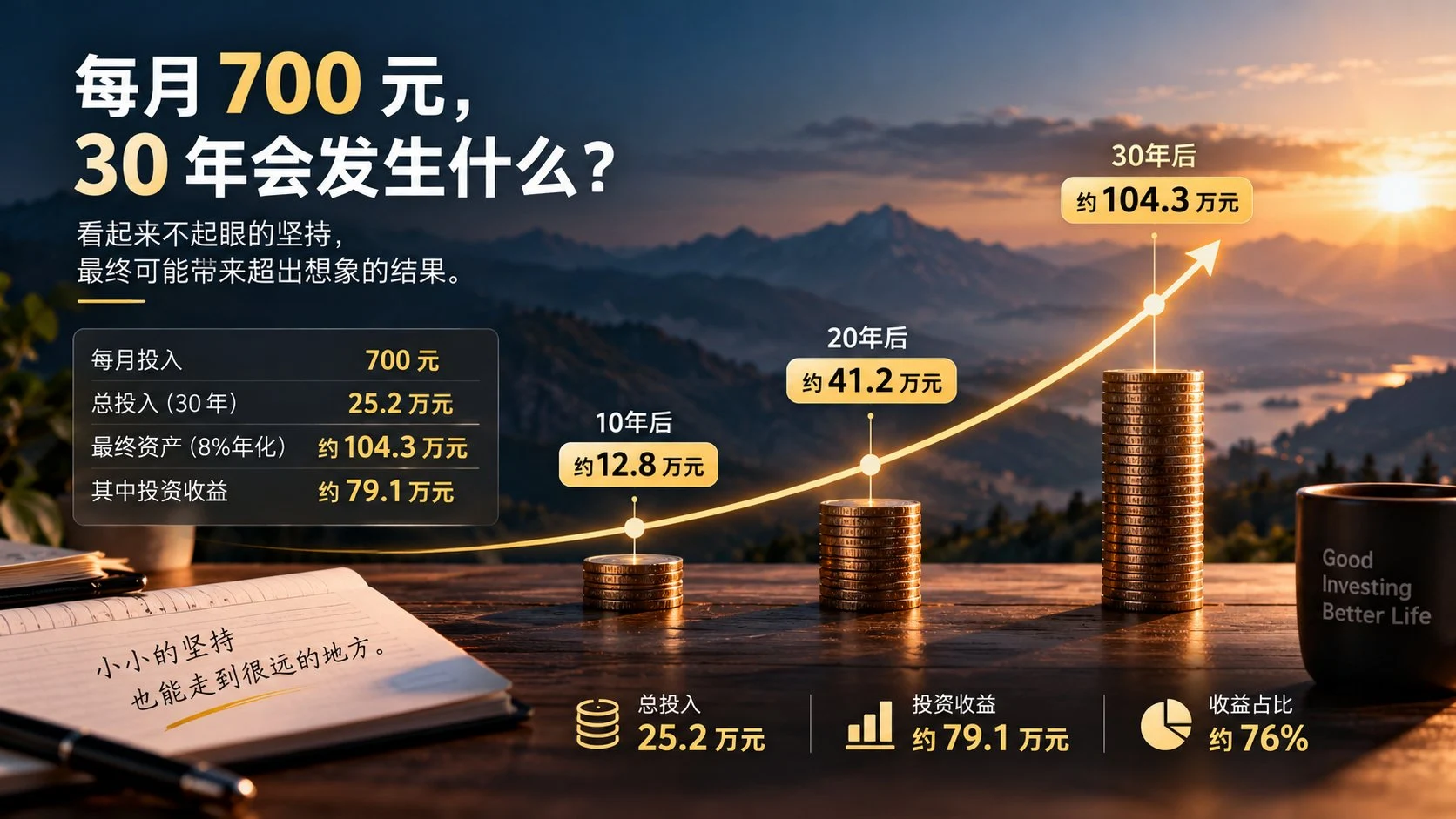
Suppose you set aside 700 yuan every month and keep investing for 30 years, assuming an annualized return of 8% and reinvesting the returns.
After 10 years, you’d have about 128,000 yuan. After 20 years, about 412,000 yuan. After 30 years, about 1,043,000 yuan.
Your actual contributions would total just 252,000 yuan. The remaining nearly 790,000 yuan would all be investment returns accumulated over time.
What’s the most interesting part?
Over the first 20 years, you worked hard to build up 410,000 yuan.
But in the final 10 years, your assets grew by another 630,000 yuan.
That’s compounding. It seems painfully slow at first. The longer you go, the more clearly the value of time reveals itself.
Some might ask: Isn’t a steady annualized return of 8% too idealistic?
A look at the historical data helps answer that.
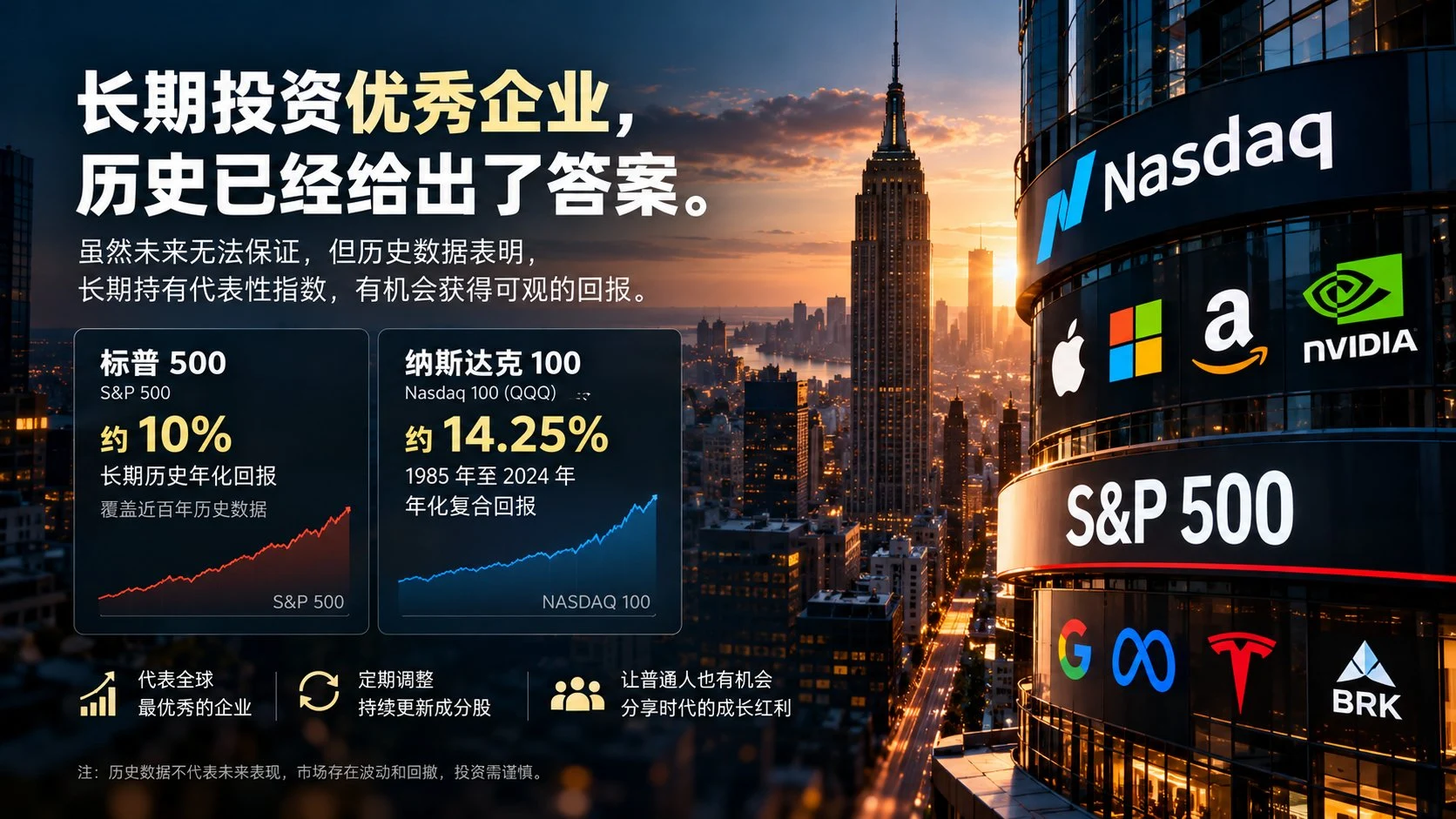
The S&P 500’s long-term historical annualized return is about 10%.
The Nasdaq-100, the index tracked by QQQ, has performed better overall over the past few decades, though with greater volatility.
These figures don’t mean you’re guaranteed to earn that much in the future. The point is that investing in some of the best companies on the planet over the long term really can offer the opportunity for solid returns.
This isn’t just theory.
In 2026, Fidelity Investments in the United States released an interesting set of figures:
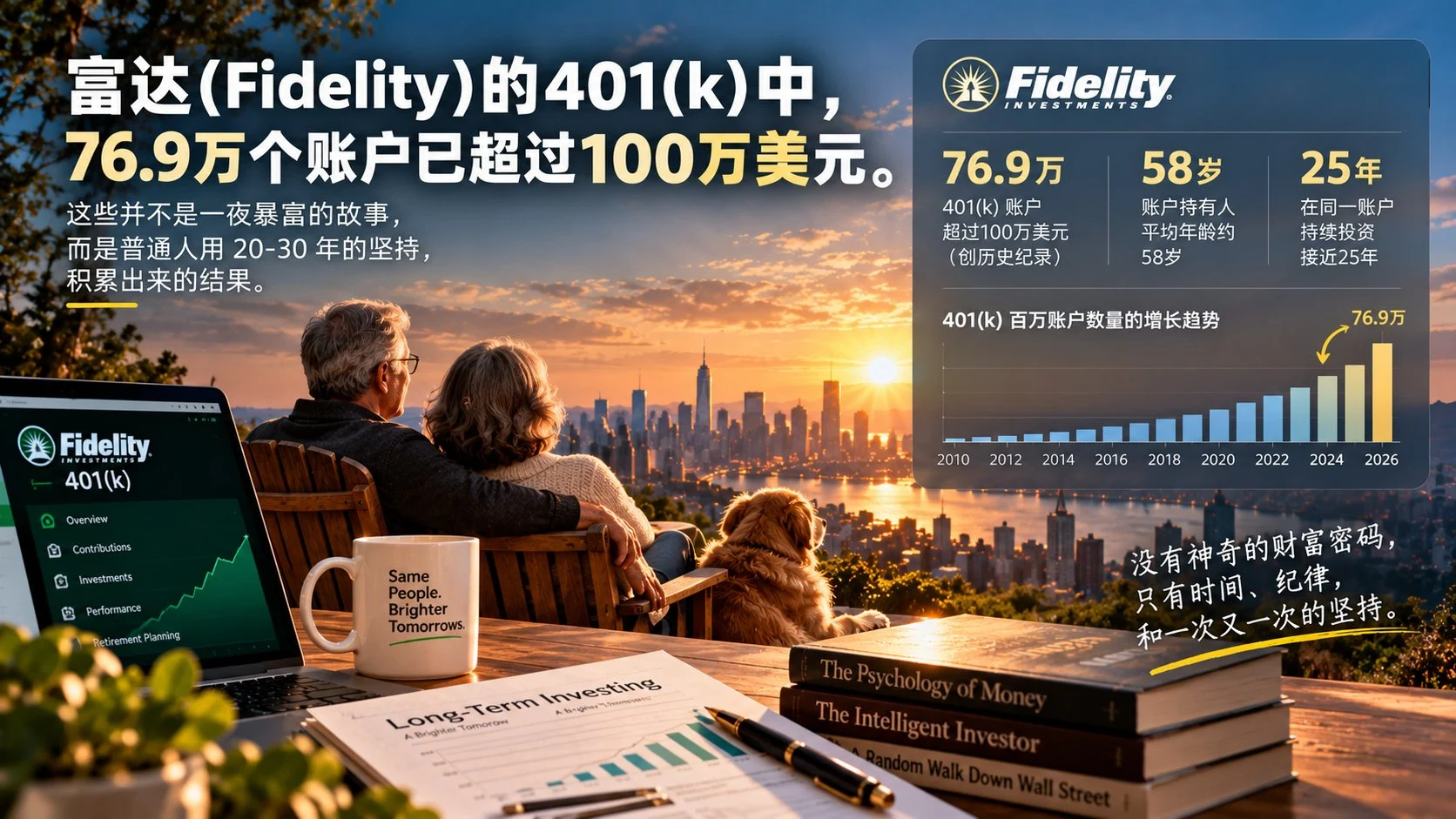
In the 401(k) retirement plans it manages alone, 769,000 accounts had accumulated more than US$1 million in assets, a record high.
The holders of these million-dollar accounts were about 58 years old on average and had invested consistently in the same account for nearly 25 years.
There’s no magical secret to wealth here.
Many people simply set aside part of their paycheck every month, add their employer’s retirement contributions, and keep investing, letting time gradually do its work.
Twenty-five years.
Long enough to live through several bull and bear markets, witness the rise of a corporate giant, and see seemingly modest contributions grow into a surprising sum.
Warren Buffett is another good example.
People see his wealth today, but it’s easy to overlook the fact that he has been investing for decades. About 99% of Buffett’s net worth was accumulated after he turned 50, with about 97% accumulated after he turned 65.
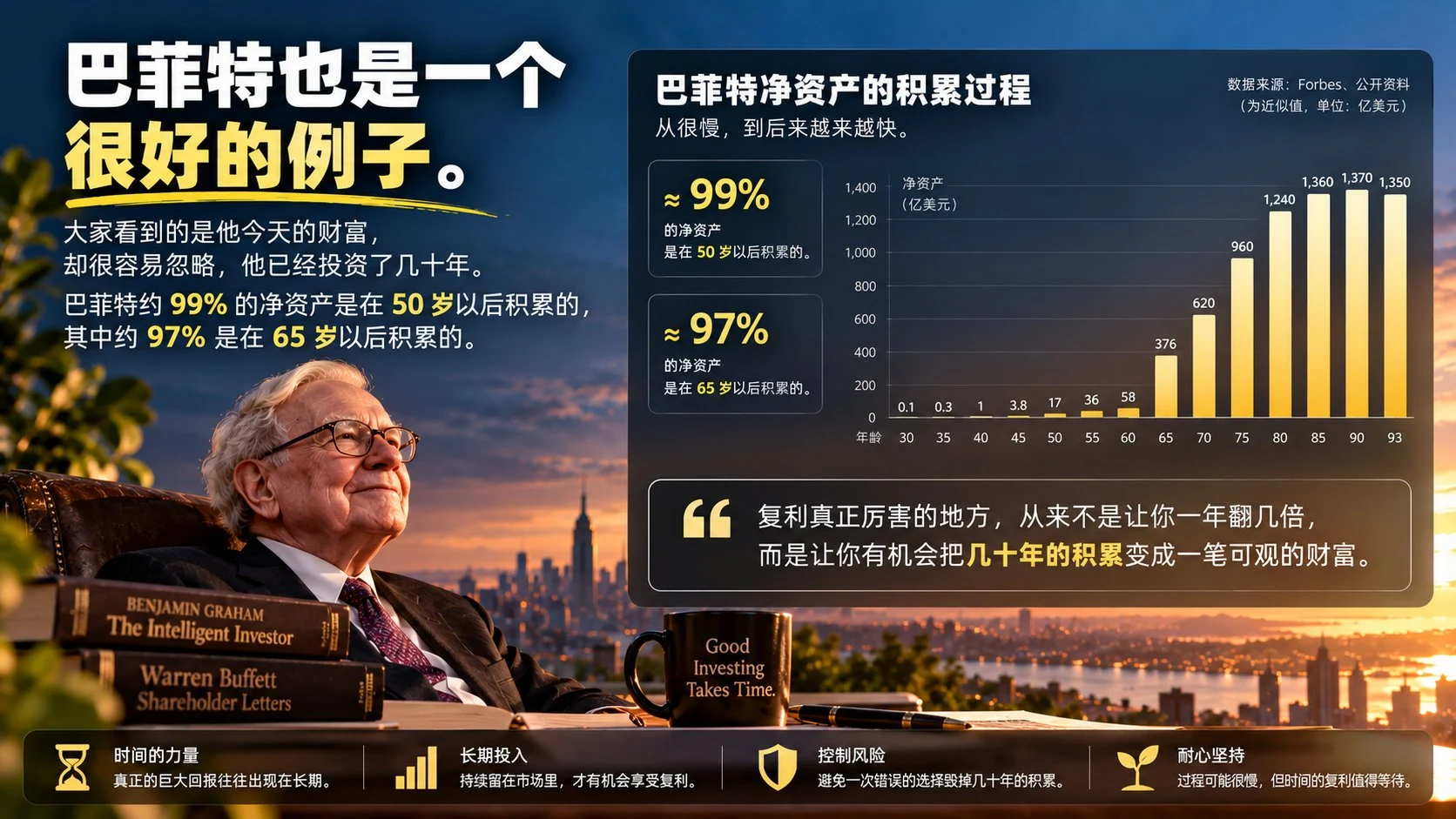
The real power of compounding has never been about multiplying your money several times over in a year. It’s about giving you the chance to turn decades of accumulation into substantial wealth.
As for me, I’ve done plenty of tinkering over the years, too.
Researching individual stocks, industries, and all kinds of investment strategies, trying to find more opportunities for excess returns.
But the longer I kept at it, the more I realized: finding one opportunity isn’t that hard.
What’s hard is getting it right every time, and continuing to get it right for decades. Nvidia leads today. Who will lead tomorrow?
Will familiar giants like Apple, Microsoft, and Amazon keep leading for decades to come?
Nobody knows. But that’s exactly why I’ve become increasingly convinced of the value of index investing.
Many people overlook an important fact:
Indexes are updated.
The Nasdaq-100 regularly reviews and reselects its constituents, and the S&P 500 continually makes adjustments according to its own criteria.
New large companies may be added, while former star companies may be replaced.
The market giants of decades ago are no longer the same group of companies as today’s giants.
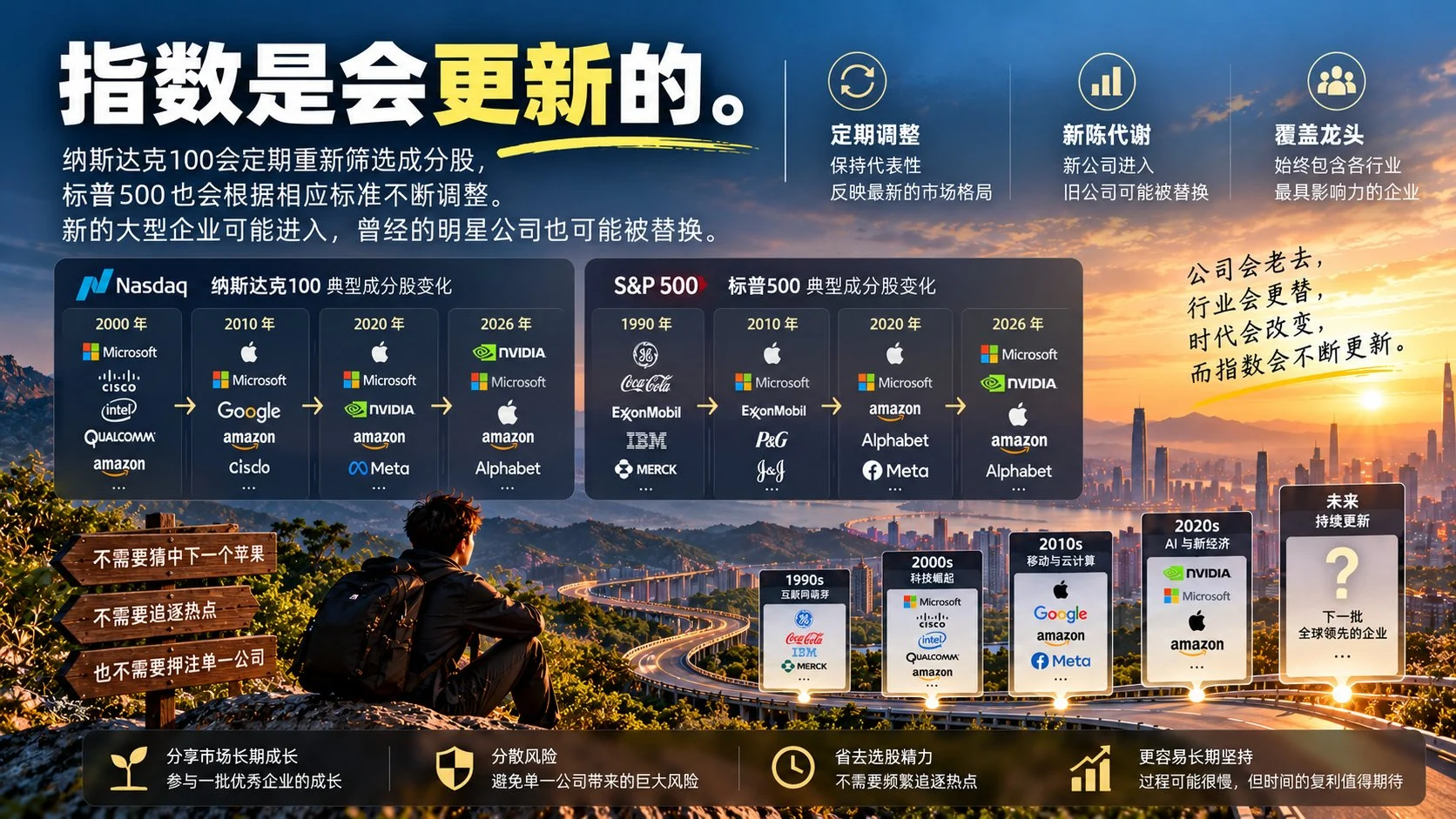
As the market evolves, indexes keep updating their constituents. What does that mean?
- You don’t need to spot the next Apple 20 years in advance.
- You don’t need to predict exactly who will become the next Nvidia.
- And you certainly don’t need to stake decades of accumulated wealth on the future of a single company.
Through index funds, you can spread your money across a representative group of large companies and participate in the growth of different businesses as the market evolves.
Of course, indexes have limitations, too. They can’t guarantee they’ll always select the best companies, let alone guarantee that your investment will make a profit.
But for ordinary people, they at least save a great deal of effort spent picking stocks and chasing hot trends.
Companies age, industries come and go, times change, and indexes keep updating.
You don’t need to pick the winner every time. You just need to do your best to keep one bad choice from wiping out decades of accumulation.
That’s also why, after all that tinkering, I’ve become increasingly willing to make index investments the core of my long-term portfolio.
They may not be the fastest way to get rich.
But they offer a relatively simple, transparent approach to investing that’s easier to stick with over the long term.
We always overestimate what one year can change and underestimate what 20–30 years can change.
The process may be slow, and it won’t always be smooth sailing.
But for ordinary people, staying in the market, contributing with discipline, managing risk, and growing alongside excellent companies is valuable in itself.
Building wealth slowly has never meant lacking ambition.
Quite the opposite.
It means being willing to pass up the seemingly easy temptations of quick riches today in pursuit of freedom further down the road.
Compounding doesn’t care which country you’re in or which account you use.
It favors one kind of person most: someone willing to build wealth slowly.
We’re already in the final quarter of 2026.
If you’ve lost quite a bit trading stocks this year, or are still sitting on deep losses, I really don’t think you need to insist on making it all back before year-end.
The more desperate you are to break even, the easier it is to chase rising prices and sell into declines, making your losses even bigger in the end.
Take another look at your holdings.
If you own a collection of stocks you can’t even explain why you bought, and you don’t have enough confidence in their future to keep holding them, it’s worth seriously considering whether to gradually shift the focus of your long-term investing toward QQQ or S&P 500 index funds.
Of course, switching to index investments doesn’t mean you’ll immediately break even, and it certainly doesn’t mean they won’t fall further.
But at least you can stop agonizing every day over whether a particular company’s stock will hit its daily upper price limit tomorrow, or when a particular sector will rebound.
Extend your investment horizon from next week or next month to the next ten or twenty years.
You may find yourself thinking about it completely differently.
Ultimately, I’ve come to feel more and more that the hardest part of investing for ordinary people isn’t finding opportunities. It’s accepting that you can’t capture every opportunity.
A few hundred yuan a month may really do little to change your life today.
But keep at it for twenty or thirty years, and the result might exceed your expectations.
Of course, that depends on managing risk, continuing to contribute, and being able to withstand market volatility. The longer the time horizon, the more room compounding has to work, but no investment can guarantee returns.
Finally, I’d also like to hear what you’re doing:
Are you, like Moring(漠凌), consistently investing a fixed amount at regular intervals? Are you investing in the Nasdaq-100, the S&P 500, or other indexes or assets?
If you have a long-term investing approach that’s better suited to ordinary people, please share it in the comments. Your experience might offer a helpful reference for someone who’s still hesitating or has just started investing regularly.
I’m Moring(漠凌). Let’s make the next thing happen, together.
References and Calculation Notes
This is the author’s personal experience. The compounding example assumes a contribution of 700 yuan at the end of each month, a monthly return calculated as 8% ÷ 12 from the nominal annual rate, and reinvestment of all earnings. It does not account for taxes, fees, inflation, or exchange rates. The 8% rate is an assumption, and past returns are no guarantee of future results.
- Nasdaq’s official 40th anniversary retrospective: The Nasdaq-100 posted a compound annual return of 14.25% from its launch in 1985 through the end of 2024, compared with 11.57% for the S&P 500 over the same period. The long-term figure of about 10% mentioned in the article refers to a different period.
- Fidelity’s retirement account analysis: The retirement account example uses data from the second quarter of 2026. For the exact account count, see Yahoo Finance’s coverage of Fidelity’s figures.
- Morgan Housel’s 2020 article is the source for the historical estimate of the share of Buffett’s wealth. The accompanying image is illustrative and does not represent precise historical data.